Introduction to Culture as a Growth Engine
In most cleaning businesses, growth depends on marketing, pricing, and hiring. However, there’s one overlooked driver that quietly determines long-term success: company culture.
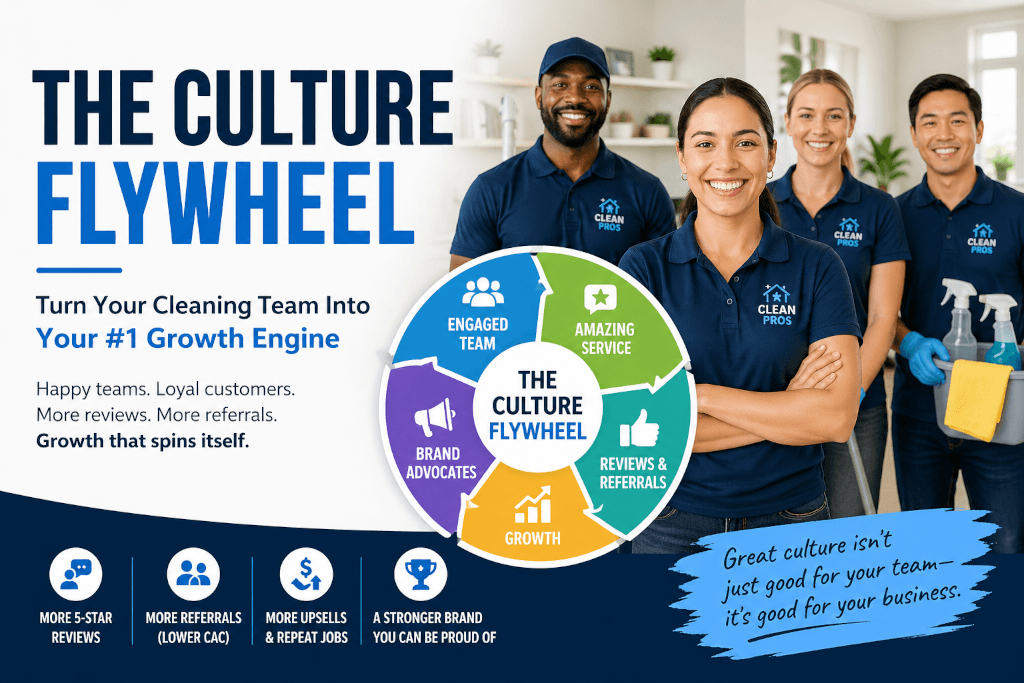
When used correctly, culture isn’t just about morale—it becomes a self-reinforcing growth system. This is what we call the Culture Flywheel.
Instead of constantly chasing new leads, you build a team that creates them.
In this article, we’ll break down how to turn your cleaning team into brand ambassadors who generate reviews, referrals, and upsells—without feeling like salespeople.
What Is the Culture Flywheel?
The Culture Flywheel is a system where:
- Strong culture drives better performance
- Better performance leads to happy customers
- Happy customers generate growth (reviews, referrals)
- Growth reinforces culture through rewards and pride
Once it’s spinning, momentum builds naturally.
The 3 Core Components
- People – Who you hire and how they think
- Systems – How work gets done consistently
- Incentives – What behaviors get rewarded
If one is missing, the flywheel stalls.
Why Most Cleaning Businesses Get Culture Wrong
Hiring vs. Culture
Many owners think culture starts with hiring. That’s only partially true.
Hiring the “right people” doesn’t fix a broken system. Even great employees fail in unclear environments.
Transactional vs. Transformational Teams
A transactional team says:
“I clean, you pay me.”
A transformational team says:
“I represent the brand, the customer, and the outcome.”
That shift is everything.
Turning Cleaners Into Marketers
This is where the Culture Flywheel becomes powerful.
Your cleaners are the only people customers consistently interact with. That makes them your strongest marketing channel.
Reviews as Revenue
Most companies beg for reviews. That rarely works.
Instead, build a system:
- Train cleaners to recognize “wow moments”
- Prompt reviews immediately after those moments
- Reward reviews tied to customer satisfaction
Example:
- Cleaner finishes a deep clean
- Customer expresses excitement
- Cleaner says:
“That means a lot—if you don’t mind sharing that in a quick review, it really helps us.”
Simple. Natural. Effective.
For additional insights on review strategies, see this external resource:
https://www.brightlocal.com/research/local-consumer-review-survey/
Referral Systems That Work
Referrals don’t happen by accident.
Create a structured approach:
- Offer small bonuses for referred clients
- Provide cleaners with simple scripts
- Make referrals easy (QR codes, links)
Upselling Without Pressure
Upselling should feel helpful—not pushy.
Teach cleaners to:
- Identify needs (e.g., neglected baseboards)
- Suggest solutions
- Frame it as value
Example:
“We noticed buildup in the grout—next time we could do a deep treatment if you’d like.”
Designing Incentive Structures That Reinforce Culture
Incentives shape behavior. Period.
Behavior-Based Incentives
Don’t just reward output (number of homes cleaned).
Reward:
- Positive customer feedback
- Reviews generated
- Team collaboration
- Attention to detail
Recognition Systems
Money matters—but recognition often matters more.
Effective systems include:
- Weekly shoutouts
- “Cleaner of the Month”
- Public praise in team meetings
People want to feel seen.
Culture Systems That Reduce Turnover
High turnover kills cleaning businesses.
A strong Culture Flywheel solves this.
Onboarding Systems
First impressions matter.
Your onboarding should:
- Explain company values clearly
- Show expectations in action
- Build confidence quickly
Communication Frameworks
Poor communication creates frustration.
Instead:
- Use daily check-ins
- Provide clear feedback loops
- Encourage open dialogue
Building Quality Through Culture
Quality isn’t enforced—it’s cultivated.
Accountability Without Micromanagement
Micromanagement kills morale.
Instead:
- Set clear standards
- Use checklists
- Let cleaners own their work
Ownership leads to pride.
Leadership’s Role in the Flywheel
Culture starts at the top.
Leaders must:
- Model behavior
- Reinforce values consistently
- Avoid contradictions
If leadership says one thing and does another, the flywheel breaks.
Measuring Culture ROI
You can’t improve what you don’t measure.
Track:
| Metric | Why It Matters |
|---|---|
| Customer reviews | Reflect satisfaction |
| Referral rate | Indicates trust |
| Employee retention | Measures culture strength |
| Upsell revenue | Shows engagement |
These numbers tell the real story.
Implementation Blueprint
Here’s how to build your Culture Flywheel step-by-step:
- Define core values
- Align incentives with values
- Train cleaners as brand ambassadors
- Build review + referral systems
- Reinforce behavior consistently
- Measure and adjust
Consistency is key.
FAQs
1. How long does it take to build a Culture Flywheel?
Typically 3–6 months to see momentum, but full impact can take a year.
2. Can small cleaning businesses implement this?
Absolutely. In fact, smaller teams often adopt culture systems faster.
3. What if my current team resists change?
Start with small wins. Reward desired behaviors early.
4. Do incentives have to be monetary?
No. Recognition, flexibility, and growth opportunities are powerful motivators.
5. How do I train cleaners to ask for reviews?
Use role-playing, scripts, and real-world examples.
6. What’s the biggest mistake to avoid?
Inconsistency. If you don’t reinforce culture daily, it fades.
Conclusion
The Culture Flywheel isn’t just a concept—it’s a competitive advantage.
When you align people, systems, and incentives, your cleaning team becomes more than a workforce. They become brand ambassadors who drive growth naturally.
Instead of chasing customers, your business attracts them.
And that’s when things really start to scale.